Few subjects attract as many cannabis myths as Thailand. Between 2022 and 2025, the country went from strict prohibition to one of the most open cannabis markets in the world, and then, in mid-2025, back to a medical-only system. Every stage produced its own articles, videos and holiday stories, and many of them are still circulating long after they stopped being true.
On Koh Samui, we hear the same misunderstandings every week. Some are harmless. Others can lead to fines, a ruined evening or, at an airport, very serious trouble. Here are the ten cannabis myths visitors to Thailand most often believe, and the truth behind each one. The information is up to date as of September 2026, and it is general information, not legal or medical advice.
Key takeaways
- Weed is not legal for everyone in Thailand: since mid-2025, cannabis flowers require a Thai prescription.
- Foreign medical cards do not work, public consumption is banned and crossing borders with cannabis is a serious offence.
- Vapes and e-cigarettes are illegal in Thailand, whatever they contain.
- Indica and sativa labels, and THC percentages, say less about a flower than most people think.
- Edibles act slowly, alcohol makes things worse, and nobody should drive after using cannabis.
In this article
Why cannabis myths spread so fast
Cannabis myths spread for a simple reason: the rules in Thailand changed faster than the information about them. A travel blog written in 2023, describing shops on every corner and no questions asked, was accurate when it was published. It still ranks in search results today, even though the situation is completely different.
Word of mouth adds another layer. A friend who visited in 2024 will honestly tell you what they saw, without knowing that it no longer applies. Social media then amplifies the most surprising stories, whether or not they are true. The result is a cloud of half-truths that visitors carry with them when they land.
The best defence is to check the date of what you read and to rely on sources that explain where their information comes from. Our guide on whether weed is legal in Thailand is updated whenever the rules change.
Myth 1: “Weed is fully legal in Thailand”
This is the most widespread of all cannabis myths, and the most important to correct. Between June 2022 and mid-2025, cannabis flowers were indeed sold widely in Thailand, including to tourists, with few conditions.
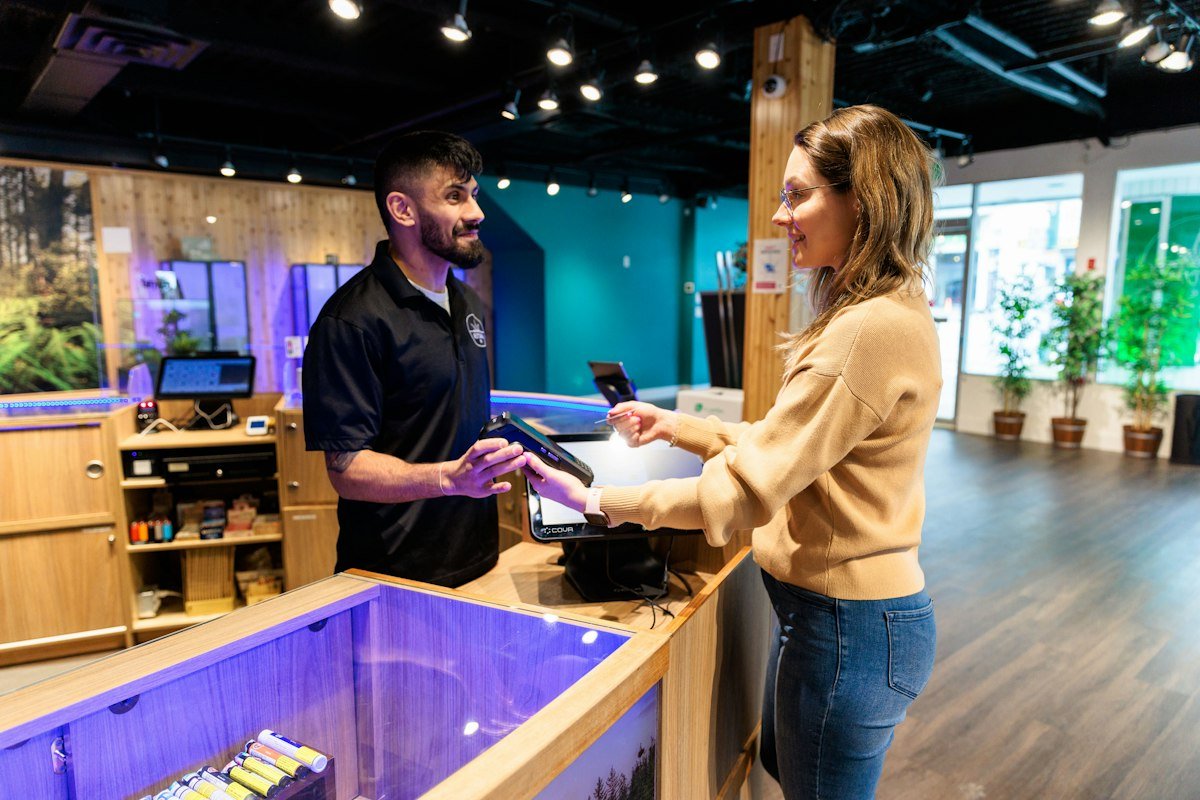
The truth is that the government changed course in mid-2025. Cannabis flowers are now a controlled herb that may only be supplied to patients with a valid Thai prescription, usually called a PT33. In September 2025, prescriptions were limited to 30 days and to five conditions, as reported by Nation Thailand. Recreational sale and use are not allowed.
Many of the shops that opened during the boom years have closed, and the licensed businesses that remain now work more like clinics than boutiques, with a practitioner on site. A business that still sells flowers to anyone who walks in, without a prescription, is not operating within the rules, whatever its sign or its licence on the wall suggests.
So the accurate answer is: legal for medical use with a prescription, not legal for recreational use. Our guide to the PT33 prescription explains how the system works.
Myth 2: “My medical card from home works here”
Many visitors hold a medical cannabis card or prescription from Canada, Germany, Australia or a US state, and assume it will be recognised in Thailand.
The truth is that foreign medical cards and prescriptions have no legal value in Thailand. Only a prescription issued by a licensed practitioner in Thailand counts. And bringing cannabis into the country, even with a prescription from home, is treated as a serious drug offence.
If you are a patient at home, talk to a licensed practitioner in Thailand about your situation. They will assess you under Thai rules, like any other patient.
Myth 3: “You can smoke anywhere now”
During the boom years, it was common to smell cannabis on beaches and in nightlife areas, and many visitors concluded that public smoking was tolerated.
The truth is that smoking cannabis in public has never been allowed under the post-2022 rules, and it is not allowed today. Smoke that disturbs others is treated as a public nuisance, with fines of up to 25,000 baht. Beaches, streets, parks, viewpoints, markets and temple grounds are all public places.
Even with a prescription, use cannabis only in private places where the owner allows it. Many hotels, resorts and villas on Koh Samui ban smoking indoors, and some ban cannabis entirely.
Myth 4: “A little in my luggage will be fine”
This myth is the most dangerous, because the consequences can be life-changing. Some visitors think that a small amount, well hidden, will go unnoticed, or that it is legal because it was bought legally in Thailand.
The truth is that taking cannabis out of Thailand is illegal, whatever the quantity and wherever you are going. Airports use scanners and trained dogs, and customs officers check luggage. Many countries in the region, including Singapore, Malaysia and Indonesia, have some of the harshest drug laws in the world, and they apply to anything found when you land, even in transit.
The rule is simple: leave Thailand with nothing. Use prescribed cannabis within your prescription period or dispose of it responsibly before you travel.
Myth 5: “Vapes are fine in Thailand”
Vapes are so common in many countries that visitors rarely think twice about bringing one, whether it contains nicotine, CBD or THC.
The truth is that vapes and e-cigarettes are banned in Thailand. Importing, selling and possessing them can lead to confiscation and fines, and travellers have been caught out at airports and in the street. This applies to nicotine vapes as much as to cannabis ones.
Leave your vape at home, and do not buy one in Thailand, however openly it seems to be sold. The fact that vapes are visible in some markets does not make them legal, and the risk of a fine falls on the buyer as much as on the seller.
Myth 6: “Indica always makes you sleepy, sativa always energises”
Menus around the world divide strains into indica, sativa and hybrid, and many people believe the label tells them exactly how a strain will feel.
The truth is more nuanced. The labels come from botany and describe a plant’s heritage and appearance. Studies, including a large 2022 analysis published in PLOS ONE, found that they are a poor predictor of a flower’s chemistry. Most strains today are hybrids, and the experience depends much more on the cannabinoids, the terpenes, the dose and the person.
Use the label as a starting point, not a promise. Our guide to indica vs sativa explains what to look at instead.
Myth 7: “Higher THC always means better weed”
THC percentages have become a selling point, and many people choose the flower with the highest figure on the label.
The truth is that THC is only one part of quality. A flower with a very high THC figure can still be badly dried, old, harsh or even mouldy, while a flower with moderate THC can be excellent. Aroma, freshness, cure, cleanliness and trim matter just as much, and a stronger product simply means that a smaller amount has a bigger effect.
Our guide to cannabis quality lists the nine signs that really matter.
Myth 8: “CBD gets you high, or CBD is completely harmless”
CBD attracts two opposite myths. Some people fear it will make them high; others believe it is a harmless wellness product with no downsides.
The truth sits in between. CBD is not intoxicating: it does not produce a high. If a product sold as CBD makes you feel high, it probably contains THC. At the same time, CBD is an active compound. It can cause side effects and interact with medication, because it is processed by the same liver enzymes as many drugs. Its proven medical uses are limited: the US Food and Drug Administration has approved one purified CBD medicine, for rare forms of epilepsy.
Our guide to THC vs CBD explains the difference between the two cannabinoids.
Myth 9: “If you feel nothing after 30 minutes, take more”
This myth is responsible for many bad evenings, especially with edibles such as cakes, cookies and gummies.
The truth is that products that are eaten act slowly. Depending on the person and what they have eaten, the effects can take from 30 minutes to two hours to appear, and they last much longer than with flowers. Taking a second dose because the first “is not working” often means both doses start acting at the same time.
Labelling makes this worse. A cake or a gummy can look exactly like an ordinary sweet, and homemade products rarely state their THC content accurately. The same product can also feel very different from one day to the next, depending on whether you have eaten.
The rule is to start with a very small amount and wait, for at least two hours with edibles, before even thinking about more. Be especially cautious with any edible that is not clearly labelled with its THC content.
Myth 10: “Cannabis and alcohol mix well”
Holidays often involve a drink or two, and some visitors assume that combining alcohol and cannabis is simply a way to relax more.
The truth is that the combination tends to increase impairment and can make people feel very unwell, with dizziness, nausea and anxiety. It also makes it harder to judge how much you have taken, and it multiplies the risks on the road.
If you use prescribed cannabis, avoid alcohol at the same time, stay hydrated in the heat, and never drive a car or ride a scooter afterwards.
Bonus: “Storage does not matter”
One last belief is worth mentioning, because it matters on a tropical island. Many visitors keep cannabis in a plastic bag, in a scooter seat or on a sunny balcony, and are surprised when it dries out, loses its aroma or grows mould.
The truth is that heat, light, air and humidity damage flowers quickly in the tropics. An airtight glass jar in a cool, dark place makes an enormous difference. Our guide on how to store cannabis explains the ten simple rules we recommend.
What to do if you have already believed a myth
Many visitors only discover the real rules after they arrive. If that is your case, do not panic: most situations can be put right quickly.
- You have a vape with you. Stop using it and dispose of it. Do not carry it around the island or take it to the airport.
- You bought cannabis without a prescription. Do not use it in public, do not share it, and do not travel with it. The safest choice is to dispose of it responsibly.
- You packed cannabis for the flight home. Take it out of your luggage before you leave for the airport, and do not try to hide it.
- You feel unwell after taking too much. Stay in a safe, quiet place, drink water, eat something light and wait: the effects will pass with time. If you feel very unwell, have chest pain or a friend cannot be woken, call Thailand’s medical emergency number, 1669.
- You need help from the police as a tourist. The Tourist Police can be reached on 1155, with English-speaking officers.
Acting early is always better than hoping for the best. In Thailand, the most serious problems come from the myths about borders and public use, and those are the easiest to avoid.
How to separate facts from cannabis myths
You will keep hearing new claims, so it helps to have a simple method for checking them.
- Check the date. Anything describing Thailand before mid-2025 may be out of date.
- Check the source. Official announcements, established news outlets and professional analyses are more reliable than anonymous posts.
- Look for specifics. Reliable information explains rules, dates and conditions. Myths tend to be vague and absolute.
- Be wary of sellers. A business that tells you rules do not apply to its customers has a reason to say so.
- Ask a professional. A licensed practitioner or a licensed dispensary can explain what applies to your situation.
When a claim sounds too convenient, it usually is. The safest assumption is that Thai rules are stricter than your friends remember.
Frequently asked questions
What is the most common of all cannabis myths about Thailand?
That weed is fully legal for everyone. Since mid-2025, cannabis flowers may only be supplied to patients with a valid Thai prescription, and recreational use is not allowed.
Can tourists use cannabis legally in Thailand?
Only with a valid Thai prescription issued by a licensed practitioner after a genuine consultation, and only in private places where the owner allows it.
Is it true that Thailand banned vapes?
Yes. Vapes and e-cigarettes are illegal in Thailand, whether they contain nicotine, CBD or THC, and possession can lead to fines.
Does CBD make you high?
No. CBD is not intoxicating. A product sold as CBD that makes you feel high probably contains THC.
Is Koh Samui stricter than the rest of Thailand?
No. The same national rules apply on Koh Samui as everywhere else in Thailand: cannabis flowers require a prescription, public consumption is banned and vapes are illegal. Individual hotels, resorts and villas can add their own, stricter rules for their guests.
Where can I find reliable, up-to-date information?
Start with official sources such as the Ministry of Public Health and its Department of Thai Traditional and Alternative Medicine, established news outlets, and dated guides such as ours.
Sources
- Thai Health Ministry tightens medical cannabis rules, Nation Thailand, September 2025.
- Cannabis in Thailand 2026: how dispensaries are adapting to the medical-only rules, the Thaiger, August 2026.
- Smith C. J. et al., The phytochemical diversity of commercial cannabis in the United States, PLOS ONE, 2022.
- FDA regulation of cannabis and cannabis-derived products, including CBD, US Food and Drug Administration.
Last updated: September 2026. This article is general information, not legal or medical advice. Thai cannabis rules change often: check the latest official information before you buy, carry or use any cannabis product.