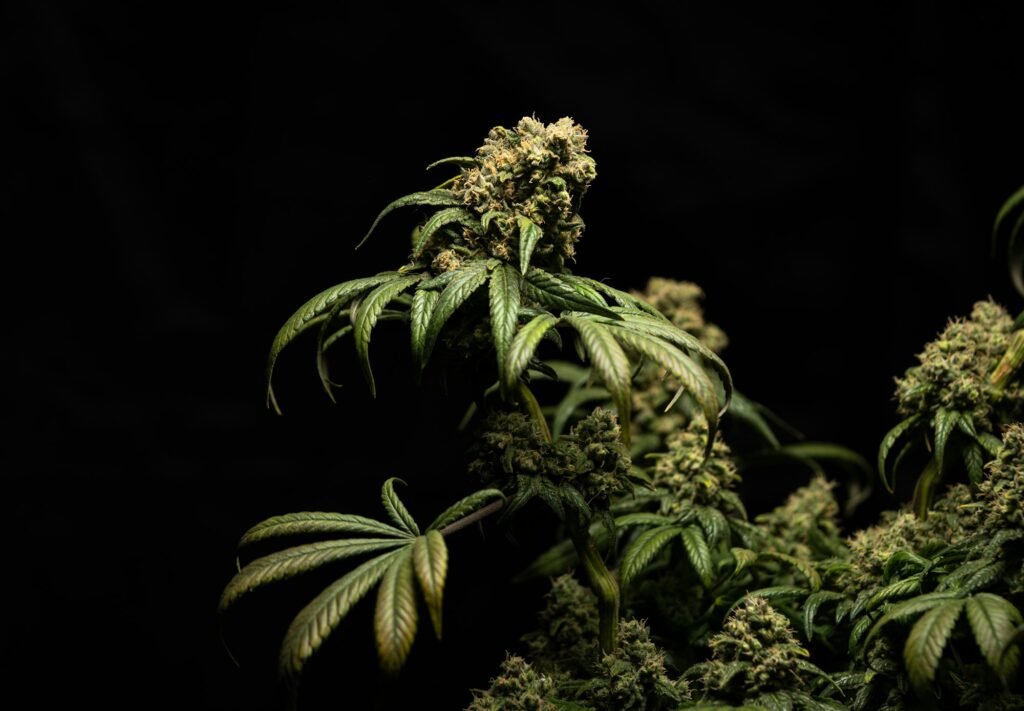
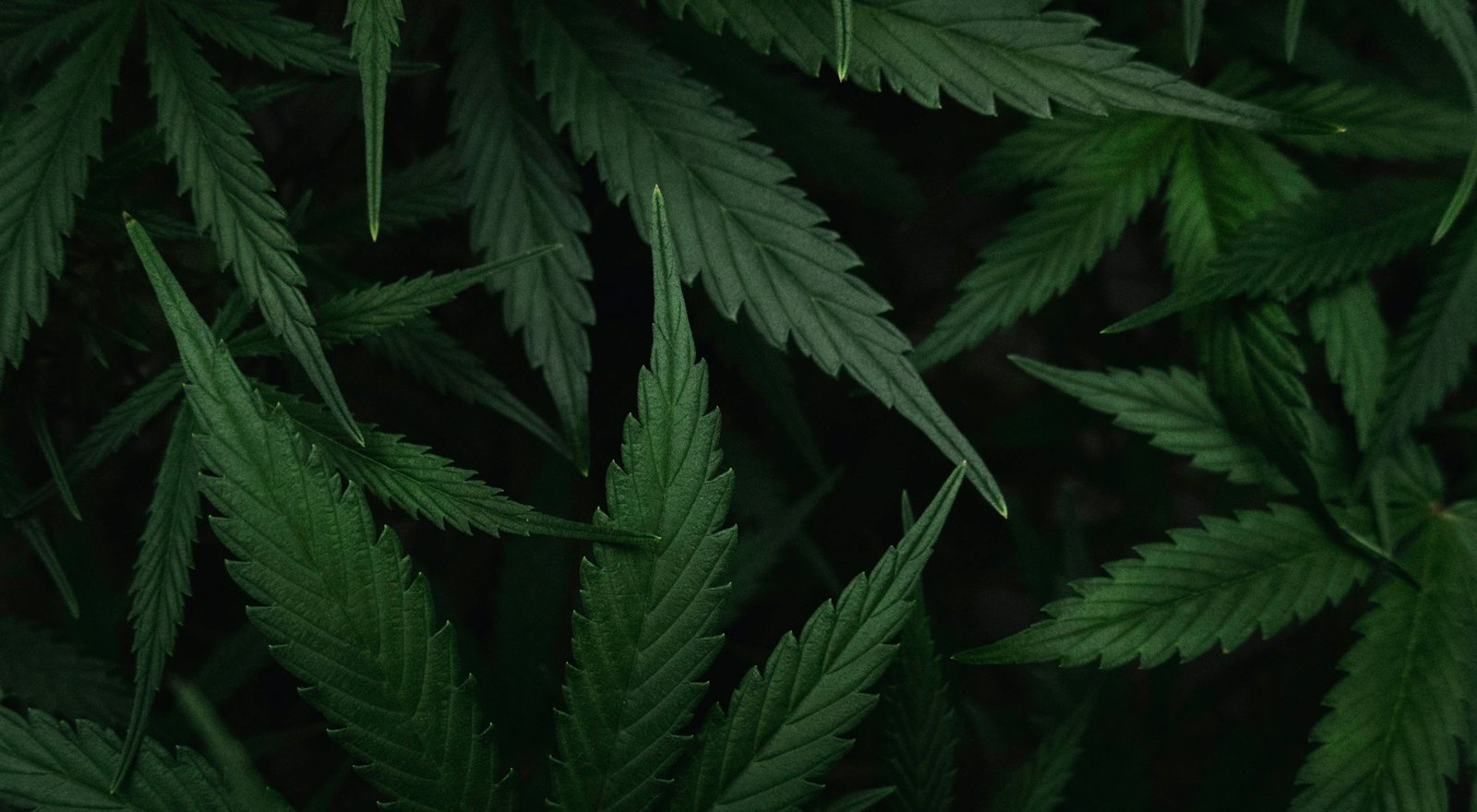
Indica vs sativa is probably the most famous debate in cannabis. Walk into almost any dispensary in the world, including on Koh Samui, and you will see strains sorted into three families: indica, sativa and hybrid. The labels are everywhere, on menus, jars and websites, and many people choose a strain on that basis alone.
But what do these words actually mean? Where do they come from, and how much do they tell you about a particular flower? This guide explains the botany behind the labels, what modern research says about them, why almost everything you can buy today is a hybrid, and how to look beyond the label to understand a strain. It is general information, not medical advice.
Key takeaways
- Indica and sativa began as botanical names in the eighteenth century, describing plants from different regions.
- Classic descriptions say indicas are short and bushy and sativas tall and slender, but most modern strains are hybrids.
- Studies show that the indica vs sativa label is a poor predictor of a flower’s chemistry.
- Cannabinoids such as THC and CBD, and aromatic terpenes, tell you more than the label.
- Use the labels as a starting point, then ask about aroma, cannabinoid content and freshness.
In this article
Where the words indica and sativa come from
The story begins with eighteenth-century botany. In 1753, the Swedish botanist Carl Linnaeus described Cannabis sativa, the plant grown in Europe for fibre and seed. In 1785, the French naturalist Jean-Baptiste Lamarck described Cannabis indica, based on specimens from India that were shorter, more branched and more psychoactive.
For more than two centuries, botanists have debated whether these are two species, subspecies or simply varieties of a single species. That debate is still not fully settled, and some specialists point out that the popular names used in dispensaries today do not match the original botanical meaning very well.
The modern cannabis world adopted the words in a looser sense. From the 1970s onwards, growers and breeders used “sativa” for tall, narrow-leaved plants from equatorial regions such as Thailand, Colombia or Mexico, and “indica” for short, broad-leaved plants from mountainous regions such as Afghanistan and the Hindu Kush. Those shortcuts became the labels we still see on menus.
Indica vs sativa: the classic descriptions
Here is how the two families are traditionally described. These descriptions are useful to understand the vocabulary, but, as we will see, they are generalisations.
| Trait | Indica, as traditionally described | Sativa, as traditionally described |
|---|---|---|
| Plant shape | Short, bushy, dense | Tall, slender, airy |
| Leaves | Broad, dark green leaflets | Long, narrow, lighter leaflets |
| Flowering time | Shorter | Longer |
| Traditional origin | Mountain regions of Central and South Asia | Warm equatorial regions |
| Often described as | Heavy, relaxing, “evening” | Bright, uplifting, “daytime” |
The last line is the one people care about most, and it is also the least reliable. Descriptions such as “relaxing” or “uplifting” come mostly from tradition and personal reports, not from anything the label can guarantee. Individual experience also depends on the dose, the person and the setting.
What science says about the labels
In recent years, researchers have tested the indica vs sativa labels against the actual genetics and chemistry of commercial cannabis, and the results are humbling.
A 2015 genetic study published in PLOS ONE compared the reported ancestry of dozens of commercial strains with their DNA. It found that the labels often did not match the genetics, and that samples sold under the same name could be genetically quite different.
A larger 2022 study, also published in PLOS ONE, analysed the chemical composition of tens of thousands of cannabis samples sold in the United States. The researchers found that the indica, sativa and hybrid labels did not reliably correspond to distinct chemical profiles. Samples labelled indica and samples labelled sativa often had overlapping cannabinoid and terpene contents.
In other words, the label tells you something about how a strain has been marketed and about its traditional heritage. It tells you much less about what is actually inside the flower.
What hybrid really means
A hybrid is simply a cross between two or more different parent plants. Today, after decades of crossbreeding, almost every strain on the market is a hybrid to some degree. Even strains sold as pure indica or pure sativa usually carry genetics from both families somewhere in their family tree.
That is why many menus use more nuanced terms, such as “indica-dominant hybrid”, “sativa-dominant hybrid” or “balanced hybrid”. These terms describe the breeder’s intention and the plant’s appearance more than a precise chemical profile.
On our menu, each strain carries one of the three traditional labels, indica, sativa or hybrid, because that is the vocabulary most visitors know. We see the label as a starting point for a conversation, not as the last word on a flower.
Why growers still care about the labels
If the labels are unreliable for predicting chemistry, why do growers still use them? Because they remain useful in the field. For a grower, the traditional indica and sativa traits describe how a plant behaves: how tall it grows, how long it takes to flower, how dense its buds become and how well it copes with a given climate.
Plants with a strong sativa heritage usually stretch more and flower for longer, which suits long, warm seasons like Thailand’s. Plants with a strong indica heritage usually stay compact and finish faster, which suits indoor gardens and shorter seasons. Dense, indica-style flowers can also be more vulnerable to mould in very humid conditions, a real concern on a tropical island.
So when a grower talks about indica vs sativa, they are often talking about the plant’s structure and growing cycle. The problems begin when the same words are used to promise a particular experience.
A third family: ruderalis and autoflowering plants
There is a third, less famous member of the cannabis family: ruderalis. It comes from colder regions of Central Asia and Russia, and its plants are small and hardy. Their most useful feature is that they start flowering based on age rather than day length.
Breeders crossed ruderalis with indica and sativa strains to create “autoflowering” hybrids, which flower automatically after a few weeks. These plants are popular with home growers in many countries. You will rarely see ruderalis on a dispensary menu, but it is part of the reason the family tree of modern cannabis is so complex.
Chemotypes: a more useful classification
Scientists often prefer to classify cannabis by chemotype, meaning by its chemical profile rather than its appearance. The most common system uses three main types:
- Type I, THC-dominant: high THC and very little CBD. Most of the flowers sold in dispensaries today belong to this type, whatever their label.
- Type II, balanced: significant amounts of both THC and CBD.
- Type III, CBD-dominant: mostly CBD with very little THC, which includes much of what is sold as hemp.
This classification says nothing about whether a plant is tall or short, but it tells you much more about what is actually in the flower. When you compare strains, asking for the THC and CBD content is a quick way to place a flower in one of these three types.
What actually shapes a strain’s character
If the label is only a rough guide, what should you look at instead? Three families of information matter much more.
Cannabinoids
Cannabinoids are the compounds that interact with the body’s endocannabinoid system. The best known are THC, responsible for the intoxicating effects of cannabis, and CBD, which is not intoxicating. The balance between them is one of the most important pieces of information on a label. Our guide to THC vs CBD explains the difference in detail.
Terpenes
Terpenes are the aromatic compounds that give each strain its smell and flavour, from lemon to pine to pepper. They are one reason why two strains with similar THC levels can feel so different to smell and taste. Read our guide to cannabis terpenes to learn the main ones.
Freshness and quality
A well-grown, well-cured, freshly packed flower keeps more of its aroma and cannabinoids than an old or badly stored one. Our article on cannabis quality explains what to look for.
How to read the type column on a menu
When you see indica, sativa or hybrid on a menu, read it as information about heritage and tradition. It can help you narrow down a choice, especially if you already know strains you like, but it should never be the only criterion.
Here is a practical way to use the labels:
- Start with the label to understand the general style the breeder intended.
- Check the cannabinoids, especially the THC and CBD content.
- Smell the flower if possible, or ask about its dominant terpenes.
- Ask about freshness, including harvest and packaging dates.
- Be cautious with the dose, especially with a strain you do not know.
In Thailand, remember that cannabis flowers are available only with a valid prescription, and that the practitioner and the dispensary team are there to help you choose a suitable product. Our guide on whether weed is legal in Thailand explains the current rules.
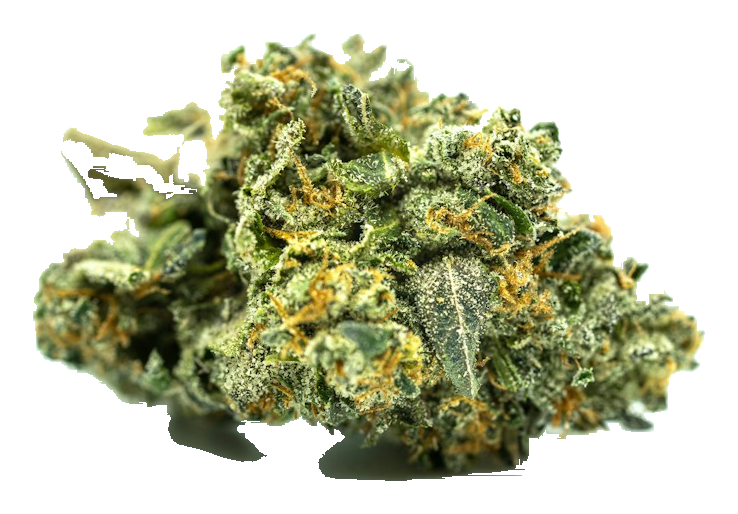
What strain names can tell you
Strain names are not scientific, but they often contain clues about a flower’s family tree. Here are some of the name families you will meet on menus around the world, including on Koh Samui.
- Haze: a family with a strong sativa heritage, often built on tropical landraces, including Thai varieties. Super Lemon Haze and Santa Marta Haze belong to this tradition.
- Kush: a name linked to the Hindu Kush mountains between Afghanistan and Pakistan, and to classic indica heritage.
- Cookies: descendants of the famous Girl Scout Cookies line, usually dense, resinous hybrids with sweet, doughy aromas.
- Runtz and dessert names: modern hybrids bred for sweet, candy-like or bakery aromas, such as Runtz Layer Cake.
- Landrace names: strains named after a place, such as Durban Poison, which often point to a traditional regional variety.
Names can also mislead. The same name can be used for plants from different breeders, and sometimes for completely different genetics. Treat a name as a hint, then check the flower itself.
Indica and sativa in Thailand’s climate
Thailand has its own place in this story. The country’s traditional cannabis varieties were classic sativa-type plants: tall, slender and slow to flower, adapted to heat, humidity and long growing seasons. They were prized abroad in the 1960s and 1970s and contributed to famous families such as Haze. Our history of cannabis in Thailand tells that story.
Today, most flowers grown in Thailand come from modern hybrid genetics, often grown indoors or in greenhouses under controlled conditions. The labels on a Thai menu therefore describe international cultivars as much as local traditions.
Three examples: sativa, indica and hybrid
To make the labels more concrete, here are three well-known strains, each associated with one of the three families.
Durban Poison (sativa). A landrace strain from the Durban region of South Africa, Durban Poison is one of the classic examples of a pure sativa heritage. It is often described as sweet, with notes of anise and pine, and is traditionally associated with a bright, clear character.
Runtz Layer Cake (indica). A modern dessert-style strain, sold as an indica. Its aroma is usually described as sweet, with vanilla and dough notes. Like most modern strains, it belongs to a long family tree of crosses.
White Widow (hybrid). A Dutch classic from the 1990s, famous for its frosty, resin-covered flowers. It is generally described as a balanced hybrid, with an earthy, resinous aroma.
These descriptions come from tradition and from how the strains are commonly presented. Individual batches can vary, which is exactly why asking about the cannabinoid and terpene content of the flower in front of you is so useful.
Better questions than indica or sativa
Next time you look at a menu, try replacing the question “indica or sativa?” with a few more precise ones.
- What is the THC and CBD content of this flower?
- What are its dominant terpenes, and how would you describe its aroma?
- When was it harvested and packed?
- Where was it grown, and is the farm certified?
- How do other patients usually describe it, and at what dose?
The answers will help you far more than a single word on a jar. They are also exactly the kind of information a good dispensary team should be able to give you.
Common myths about indica vs sativa
- “Indica always makes you sleepy.” Not necessarily. Chemistry, dose and personal factors matter more than the label.
- “Sativa is always energising.” Again, not guaranteed. Some strains sold as sativa have profiles that feel heavy to some people.
- “Indica is stronger than sativa.” Strength depends mostly on the THC content and the dose, not on the label.
- “Hybrids are a mix of effects.” A hybrid is a genetic cross, not a guaranteed blend of two experiences.
For more misconceptions, read our article on cannabis myths.
Frequently asked questions
What is the main difference in the indica vs sativa debate?
Traditionally, indica describes short, bushy plants from mountainous regions and sativa describes tall, slender plants from warmer regions. Today, the labels mostly describe heritage and marketing, and they are a poor predictor of a flower’s chemistry.
Is indica or sativa better?
Neither is better in general. What matters is the specific flower: its cannabinoid content, its terpenes, its freshness and whether it suits the person, as assessed where appropriate by a practitioner.
Are all cannabis strains hybrids today?
Almost all of them. After decades of crossbreeding, even strains sold as pure indica or pure sativa usually have mixed ancestry.
Where do the names indica and sativa come from?
Cannabis sativa was named by the Swedish botanist Carl Linnaeus in 1753, and Cannabis indica by the French naturalist Jean-Baptiste Lamarck in 1785, from plants collected in India. The modern cannabis world later adopted the words in a looser sense.
Why do dispensaries still use these labels?
Because they are familiar and give a quick idea of a strain’s style and heritage. Good dispensaries combine them with more precise information, such as cannabinoid content and aroma.
Sources
- Sawler J. et al., The genetic structure of marijuana and hemp, PLOS ONE, 2015.
- Smith C. J. et al., The phytochemical diversity of commercial cannabis in the United States, PLOS ONE, 2022.
- Cannabis, Wikipedia, for the history of the botanical names.
Last updated: September 2026. This article is general information, not medical advice. In Thailand, cannabis flowers may only be supplied with a valid prescription.